This July, USFWC Co-op Clinic Training Manager Maureen Darras went on a 3,000 mile road trip to visit cooperatives – read part one about worker-owners in Oklahoma and Arkansas here
I first encountered the cooperative scene in St. Louis in 2023, when I attended a training by Mike Milton from the Freedom Community Center and met Julia Ho, the founder of Solidarity Economy STL. Julia developed Solidarity Economy STL as a broad membership network to include cooperatives, lawyers, food justice activists and more. Solidarity Economy STL then fiscally sponsored Cooperation STL. Their workbook supports cooperatives in St. Louis and beyond by offering a straightforward explanation of how to make your business idea worker-owned, with particularly impressive insights from worker-owners at conversions in St. Louis. Cooperation STL is one of the partners involved in the St. Louis Employee Ownership Initiative, a coordinated regional project to expand employee ownership.
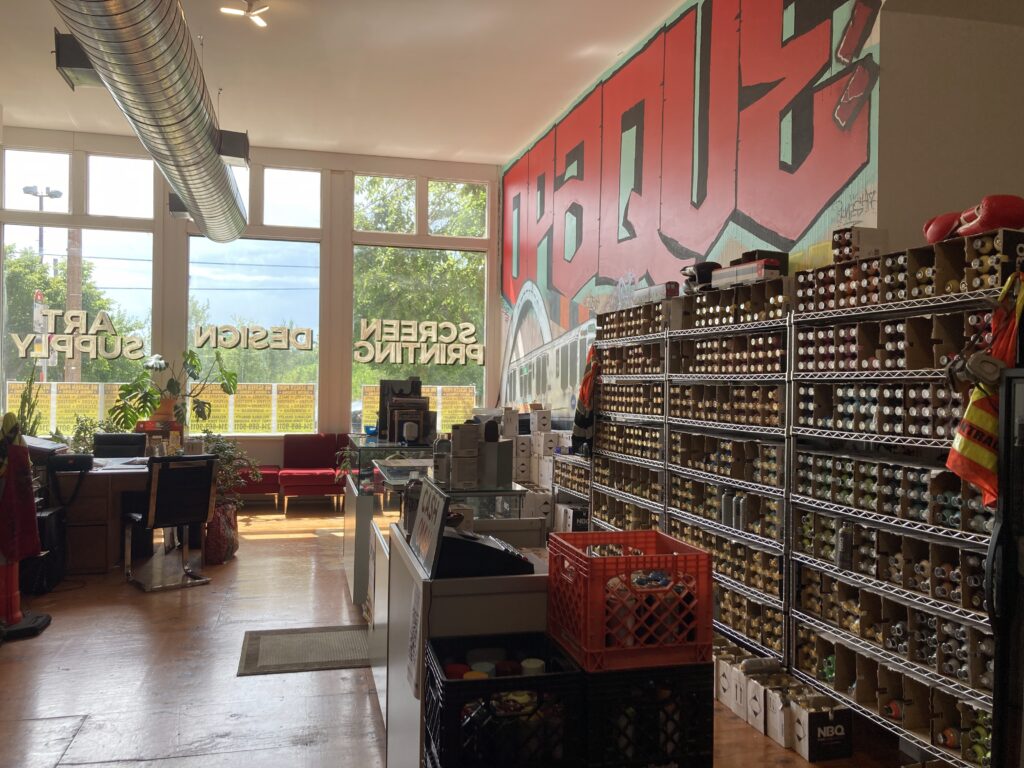
Opaque Collective supplies paint cans to graffiti artists attending St Louis’ annual Paint Louis, the largest graffiti festival in the world.
My first visit was to Opaque Collective, a screenprinting, design, and art supply store and gallery in the Patch neighborhood. Opaque founder Lizzie Efferus showed me the digital printer for fine art reproduction, the piano donated by a bicycle coop who had just purchased a church property nearby, and the screenprinting machines. Opaque prints merchandise for many local businesses, including ice cream legends Sugarwitch and worker-owned Garrity Tools co-op, where I was headed next. The newest addition to their space is a gallery with shows by appointment only, already scheduled out through the beginning of 2028. Opaque rents the property from friends in St. Louis who have granted them the first right of refusal – giving them the priority right to purchase the building before the owner can finalize a sale to anyone else.
Benefits for members, such as Bird Mad Girl Press, include access to the entire space (the gallery, equipment, and raw materials), access to bookkeeping tools, and the opportunity to sell through Opaque, with Opaque retaining 30% of the profit. Though not yet a cooperative, they’re well on their way, and I recommended connecting with other projects in shared use spaces, such as Coop Dayton’s nascent maker space and Heartwood Cooperative.
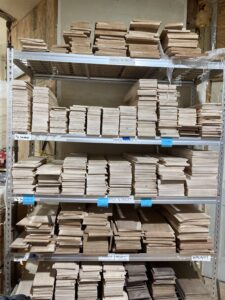
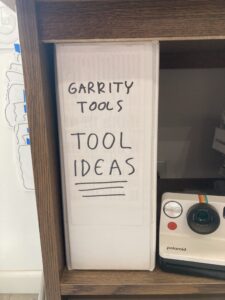
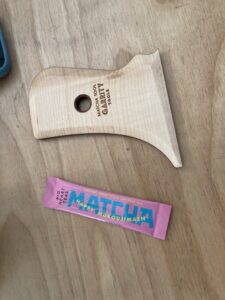
Garrity Tools makes custom wooden tool prototypes from the team-sourced “tool ideas” binder, and then collectively evaluates and determines each “tool of the month.”
My visit to Garrity Tools, who hand-make tools for ceramics, coincided with their very first day as a 100% worker-owned cooperative. To celebrate their final employee becoming a co-owner, they were having an ice cream party. I was curious to hear about how they had made it to this point.
Marine Villa Neighborhood Association played a significant role, utilizing Missouri’s nuisance property law to sue property owners who neglect vacant, deteriorating properties. Collin Garrity was the first recipient of a building as the result of the legal challenge: he bought the building for $1.
Collin had been running a woodworking company out of the property designing and manufacturing pottery tools. As business grew, Collin allowed his employees to buy-in and he stayed on as a worker-owner, becoming one of three founders of Garrity Tools. When I asked him the best thing about the conversion, he answered without skipping a beat: “Other people became co-owners who had a vision, and were organized in a way I wasn’t” said Garrity.
You can see that in the quality and craftsmanship of their products, which are beveled on both edges by a machine created by a former worker-owner with a degree in industrial design. You can also see the vision in Garrity Tools’ thoughtful practices around pay equity and organizational development; workers receive specific raises tied to taking on extra responsibilities.
Years ago, Garrity Tools partnered with the USFWC Co-op Clinic to restructure their job roles and compensation. I asked them how they felt now, as an older and more established member participating in the federation’s technical assistance and training spaces: “Attending Co-op Clinic’s Weathering the Storms was validating, and fascinating to see our position on the national scale.”
Off I went to Ohio, to visit Columbus and Cleveland for the first time. I met Anna Hetzel from marketing cooperative Strange Birds at the recently unionized Columbus Metropolitan Library Whetstone Branch. We spoke about the differences between cooperative vs industry conferences, business models, candidacy periods, and secondary cooperatives. They recommended this episode of Flying the Coop, Strange Birds’ podcast, featuring EMMA Technology Cooperative, which dives deeply into cooperative structures and cultures that allow for consensus. As Andy from EMMA explains in the episode, “We sit down and talk about the actions we’re going to do. And that doesn’t mean everyone 100% agrees all the time, but that there is a consensus reached. There’s just a hard limit on that. Like you can’t do that with 200 people. And we don’t want to.” Strange Birds operates in much the same way: full consensus with an intentionally smaller team.
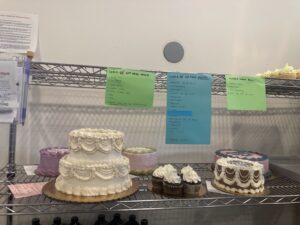
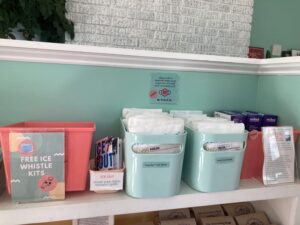
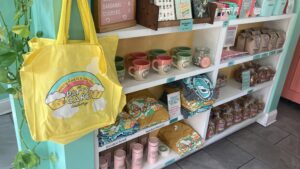
These are some of the ways that Pattycake works to keep communities safe.
Anna dropped me off at worker-owned vegan Pattycake Bakery. In their facility they have no dairy, eggs, or artificial dyes, and they’re also capable of accommodating gluten-free, nut-free, and soy-free baking requests. Jenny Scheinbach founded Pattycake 23 years ago with the intention to convert to worker-ownership. Since 2018, Pattycake has enrolled employees in USFWC’s worker benefits program. Now 40% worker-owned, the cooperative purchased a building in 2021 from another bakery that was closing down.
Punk isn’t dead at Pattycake. Worker-owners hand punch their buttons featuring Petunia, Pattycake’s cupcake mascot, as a sidetask at the register.
The next morning, I drove north to Lake Erie to visit compost cooperative Rust Belt Riders.
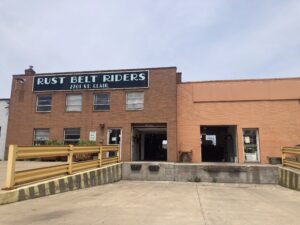
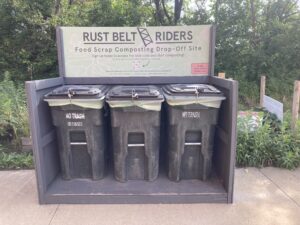
The Rust Belt Riders location I was visiting functioned as an office, drop-off site, loading/unloading warehouse, and soil sales storefront.
I spoke with employees and worker-owners who were involved in nearly every step of the composting process. I met haulers gathering food scraps from around the region to be mixed with carbon material like wood chips and broken down by a teeming community of microscopic organisms, becoming compost. Other workers were dropping off and selling the finished soil products, including compost and Bloom, soil specifically created for cannabis farms. There were niche work areas I was surprised to learn about. I spoke to Claire Linebarger, a worker-owner who runs the client support for commercial compost collection, where customers and haulers can report issues with the toters such as cracks or other damage. Claire showed me the signs she had just printed in an attempt to reduce damage, written in English and Spanish: “No hot soup!”
I asked what happened when the toters broke down. There was a time when Sofia Larkins, Site Infrastructure Manager, used to hot weld them to fix the cracks in the “toter hospital” at the back of the truck bay, in an effort to reduce waste. The coop determined that because Sofia was the only one wearing a mask, the practice was not safe for other nearby staff and deemed not a permanent solution. Rust Belt Riders then found a reuse solution: they take damaged toters out of commission and send them to be recycled into highway reflectors.
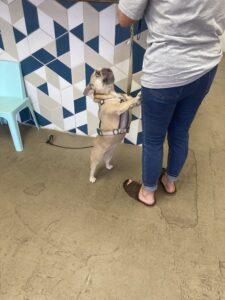
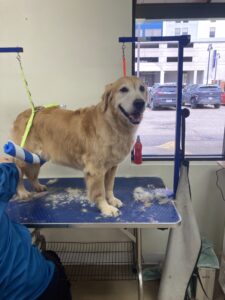
Happy clients at Suddy Buddy’s.
After 1,500 miles of traveling from coop to coop, I arrived at the final stop of the road trip: worker-owned boutique pet grooming business Suddy Buddy’s. Formerly coworkers at Petsmart, as a cooperative they’ve created standard operating procedures that lower stress for pets and people. Customers can bring their own shampoos for their dogs. The earliest and latest appointment times are reserved for older dogs and dogs with health problems, so they experience a calmer grooming environment. Every worker shares clients and splits commissions, which means all worker-owners have an incentive to care about every dog in the facility, and no one is dealing with the emotional difficulty of a single dog alone (such as the pro bono care each groomer can offer for shelter dogs).
Driving through the lower midwest and the Rust Belt, the signs of abandonment and neglect are evident. Yet countless worker-owners and organizers see an achievable path to dignity and community control in “post-industrial” cities and towns . They are using creative strategies to remake healthier, stronger, and more democratic communities. Workers are buying back neglected buildings and quitting dehumanizing workplaces together to change industry standards through cooperative ownership. Small business owners are democratizing their companies to make the most of their dreams. Along the way, community members are becoming artists, makers, and neighbors in their day-to-day lives.