How the USFWC used a global spotlight to advance worker ownership—from the United Nations to local policy wins
The 2025 International Year of Cooperatives is coming to a close. The designation of the United Nations gave the cooperative community a global stage on which to demonstrate how cooperatives drive solutions to the world’s biggest challenges.
Today, we are looking back on the ways the US Federation of Worker Cooperatives used the global spotlight on the cooperative model to help move worker cooperatives out from the margins of global conversations around the future of work and sustainability.

Advocacy at the United Nations
Elevating worker cooperatives as a proven solution for decent work, democracy, and sustainability
In April, USFWC Executive Director Esteban Kelly had the honor of representing our global cooperative movement—3 million co-ops and credit unions with 1.2 billion members—at the United Nations. He laid out a strategy for how we can come together through this moment to demonstrate how cooperatives are a better business model, solving regional, national, and global problems.
To that end, Esteban urged the UN to recognize cooperatives as key actors in a fair, sustainable future by explicitly recognizing cooperatives in the World Social Summit Declaration.
The USFWC at the U.N.:
• Represented 3 million cooperatives and credit unions worldwide
• Advocated for recognition in the World Social Summit Declaration
• Connected worker co-ops to SDG 8: Decent Work & Economic Growth
Then in July, Esteban was back at the UN representing the USFWC and worker co-ops at two different United Nations sessions.
First, Esteban visited the UN building in Manhattan, this time as part of a celebration of International Co-op Day, on this special International Year of Cooperatives. This event included local worker co-op members from New York City’s ecosystem, and leaders from Democracy At Work Institute’s New York board and staff, along with other leading organizations like The Working World. Panels ranged from a hybrid, global panel featuring credit unions from Ireland to Costa Rica, and Uganda, to a special session about New York’s Worker Co-op Business Development Initiative and a dozen years of impact data on what it looks like for a city to invest directly in supporting worker co-ops. The City’s E.D. for Small Business Services moderated the panel.
A week later, Esteban was invited to share remarks as a panelist on a hybrid, global webinar, hosted by the United Nations, about the 8th Sustainable Development Goal: Decent Work and Economic Growth. He shared impact data about how worker ownership elevates dignified work, raises wages, and builds wealth while expanding democracy through so-called social enterprise.
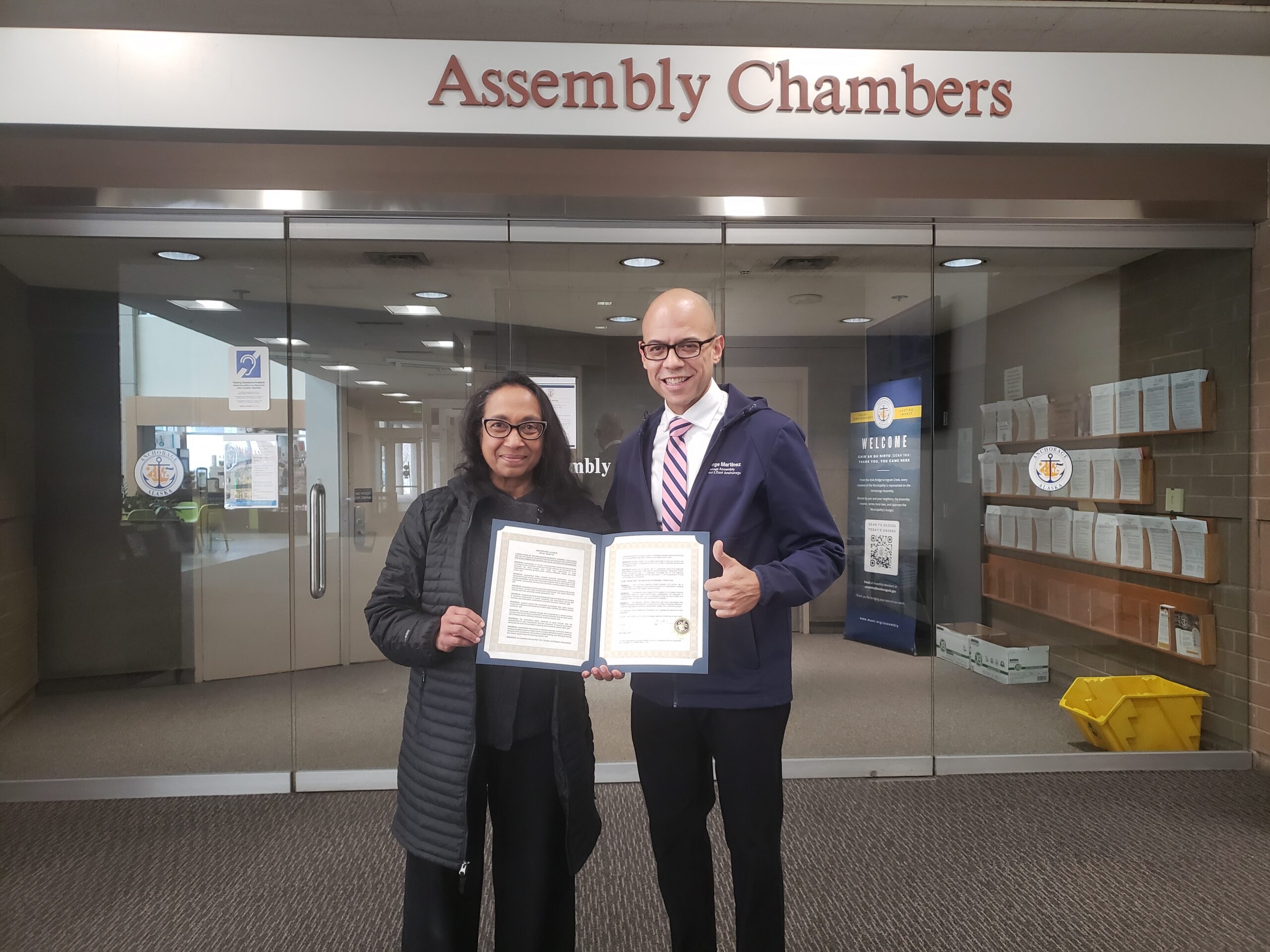
A resolution of the Anchorage Municipal Assembly declaring 2025 as the year of cooperatives in Anchorage and supporting the development and growth of local cooperative businesses. The effort was led by Yaso Thiru of USFWC member First Entrepreneur.
Cities Declare 2025 The Year Of Co-Ops
Leveraging the U.N.’s spotlight to push for regional investments
Against the backdrop of steep federal funding cuts to co-op development, advocates took to local and state governments to call for investments in cooperative ecosystems. Coordinated by the USFWC’s Policy & Advocacy Council, cooperative leaders leveraged the U.N.’s spotlight on cooperatives to get their localities to begin or expand regional commitment to worker cooperative enterprises.
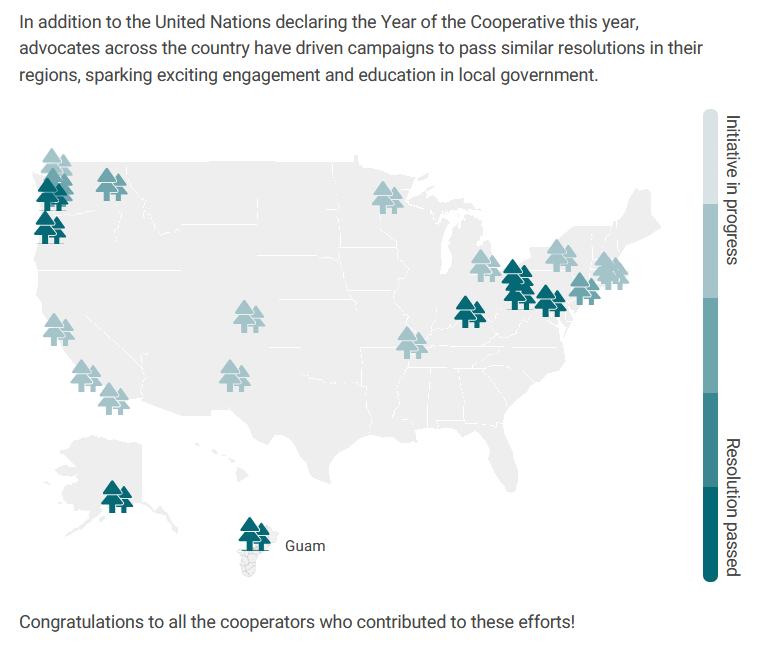
The advocacy effort builds member leadership, advancing government education and improving member advocacy skills. Eight cities and six states have passed resolutions, surpassing our goal of ten regions.
Watch Terrell Cannon of Home Care Associates give testimony in support of the IYC resolution before the City of Philadelphia:
International Exchange & Solidarity
International co-op tours and the launch of the USFWC’s International Ambassadors deepen ties across borders and strengthen the cooperative movement internationally
The USFWC was proud to co-sponsor two cooperative exploration tours from Human Agenda this fall to Honduras and Cuba.
During the Honduras trip, USFWC staff member Raquel Navarro connected with cooperatives across multiple countries. Participants from the U.S., El Salvador, and Honduras visited agricultural cooperatives, met with co-op developers initiating a new sewing cooperative, and talked extensively with CONFRAS members.
Exchanges like these are one way we invest in staff and worker-owner leadership, encourage cross-pollination and learning across co-op ecosystems, and strengthen co-op power and solidarity at the international level.
Watch the Honduras tour recap video on Instagram here.
This year, we also deepened our international partnerships by establishing a new USFWC representative role of International Ambassadors. The vision of the program is to harness international exchange and solidarity toward a just, sustainable, and peaceful world where workers have dignified jobs through ownership in democratic, cooperative workplaces.
The role will formalize a liaison relationship between the USFWC and our equivalent worker co-op association in another country. International Ambassadors will facilitate the exchange of up-to-date information on the worker co-op ecosystem/sector of each country or region, help us grow opportunities to collaborate on strategy and vision, and share critical information that helps our organizations serve our missions and advance a shared vision.
This year, we developed the responsibilities of the role, and began identifying candidates and the first round of countries or groups they will connect with.
What Comes Next
The International Year of Cooperatives showed the vast potential for worker cooperatives to reshape our economy through worker-ownership and control. The close of the year is not an endpoint—we will continue our efforts to make cooperatives the new standard for work that provides good, dignified jobs, builds community wealth and makes a positive impact on society and the planet.
But we hope that our community’s advocacy this year is a turning point. The global spotlight has helped move worker cooperatives out of the margins, but bringing the cooperative model squarely into the mainstream will require sustained organizing, advocacy and investment.
As federal support for cooperative development is rolled back and economic inequality deepens, a strong, coordinated federation is essential to ensuring worker ownership remains part of the solutions being advanced locally and globally. A year-end gift to the US Federation of Worker Cooperatives helps carry this work forward—strengthening worker power, deepening international solidarity, and advancing a fairer, more democratic economy in 2026 and beyond.