By Raquel Navarro, USFWC communications staff and Radiate Consulting Co-op Bay Area worker-owner
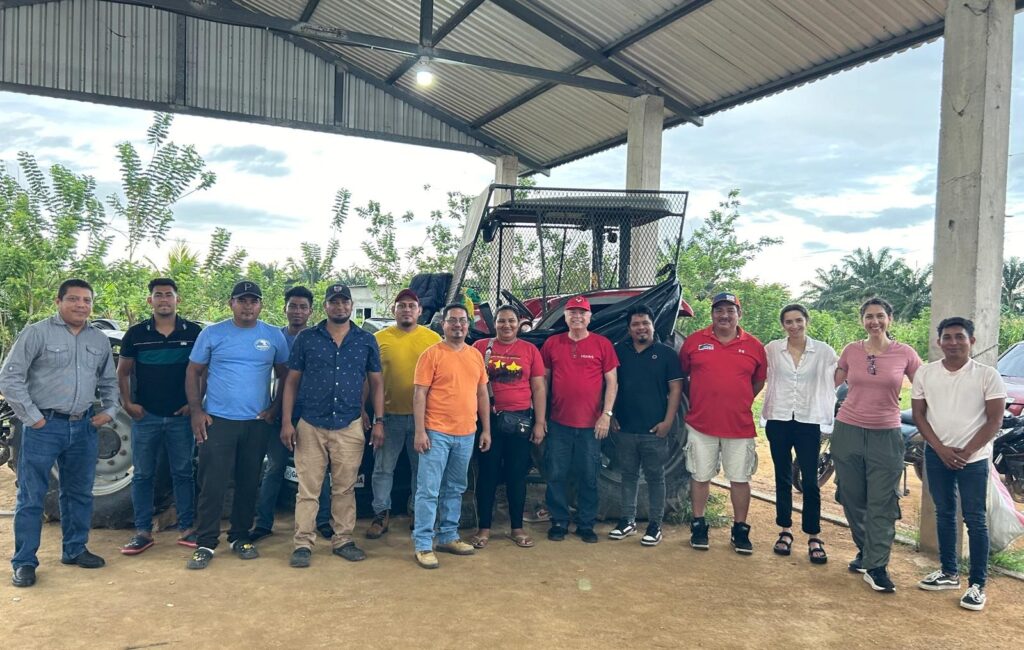
Co-op members, farmers and Human Agenda Emulation tour participants gather at Cooperative Camarones in the Valley of Aguán
This September, I joined my first international co-op tour for two weeks in Honduras. I’m a worker-owner of a consulting co-op in Oakland, California and a descendant of immigrants from El Salvador, so this tour presented a special opportunity for me to connect with the living legacy of cooperatives in Central America. On the tour, we met co-op farmers, environmental activists and indigenous women resisting capitalism. Here’s what I learned:
The fight for cooperative farming in Honduras
In the 1980s the Valley of Aguán in Northern Honduras was considered the bread basket of Central America, feeding its people and exporting corn, beans, yuca, plantains, chilies and other staple foods from 100,000 acres collectively owned by 80 cooperatives cultivated by tens of thousands of farmer-owners. Since then, multinational companies owned by infamously rich families have threatened this abundance, violently grabbing land from peasant co-op farmers and polluting local water supplies through mining.
Cooperatives Chile and Camarones continue this struggle in the Valley of Aguán. Their 140 members farm lands fertile with plantain trees, landlocked by barbed wire fences that border African Palm processing plants, spewing thick smoke, owned by encroaching multinational companies. International solidarity organizations help document and denounce threats against cooperative members and violent land takeovers. A successful consumer boycott campaign in Germany got two major contracts with the extractive corporation responsible for human rights abuses canceled indefinitely. Despite the bullet holes that still pierce the co-op greenhouses and the fear, cooperators keep fighting for their livelihoods.
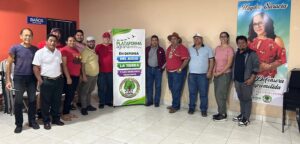
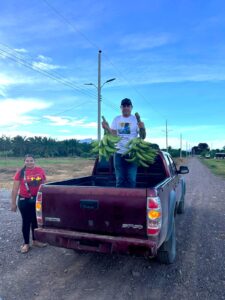
Co-op members, farmers and Agrarian Platform representatives gather / Chile Cooperative members harvest plantains in the Valley of Aguán
Cooperatives as a vital part of the solidarity economy in Tocoa
Rural women in Tocoa are actively building a local solidarity economy. Democratic member control of at least four adobe housing cooperatives and economic participation in lending circles provide a secure foundation to build co-op businesses. 30 enthusiastic women are starting out with two sewing machines to work on a fashion business plan that promises autonomy and independent income.
Women-led cooperatives are realizing gender equality, and education and training from co-op confederations in El Salvador and the U.S. support their success. Representatives from CONFRAS, the Confederation of Federations of Cooperatives in El Salvador shared their journey unlearning patriarchal values in co-ed land cooperatives while we visited the Garifuna Afro-indigenous women-led Mariposas Libres (Free Butterfly Collective). On white-sand beaches surrounded by resort hotels where mangroves once sprawled, Garifuna women sell coconut sweet breads baked in their community oven to sustain their families. Their collective empowers young women to see domestic abuse for what it is, use power in numbers to fight for accountability and change the culture of normalized gender violence against Black women.
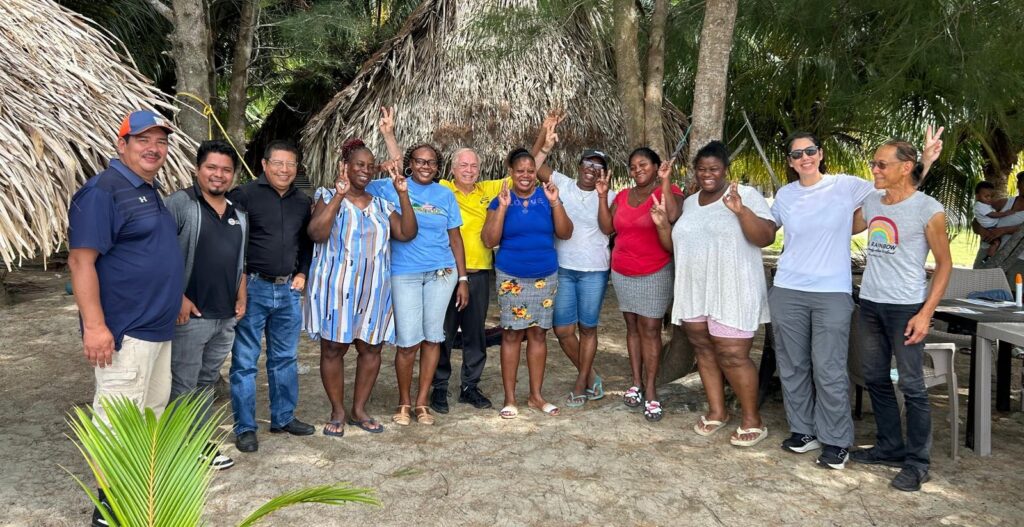
CONFRAS members, Mariposas Libres collective members and Human Agenda co-op tour participants gather in La Ensenada, Garifuna autonomous community
Reflections on the Emulation Tour
My biggest takeaway from this co-op exchange is: the struggle against exploitation for profit is universal, and we’re never alone. There are so many solutions we can emulate to build a more just world together. Collective action, worker cooperatives and international solidarity are a few impactful ways we can use our power to fight back.
About the Human Agenda Emulation Tours
International cooperative emulation tours are hosted by Human Agenda, USFWC member since 2021, whose mission is to envision a world where the needs of all humans are met and forge local institutions that are democratic, equitable, cooperative, kind and sustainable. The USFWC is proud to co-sponsor these emulation tours to connect cooperators from around the world in solidarity and interconnected struggle. Contact Richard Hobbs at richhobbs@msn.com or 408 460 2999 to join an upcoming co-op tour; USFWC members get an automatic discount!